About
Systematize the predictable.
Humanize the exceptional.
The recurring parts of your work — the grind — should be handled by a system. What's left over is the part that was always the point: the person standing in front of you.
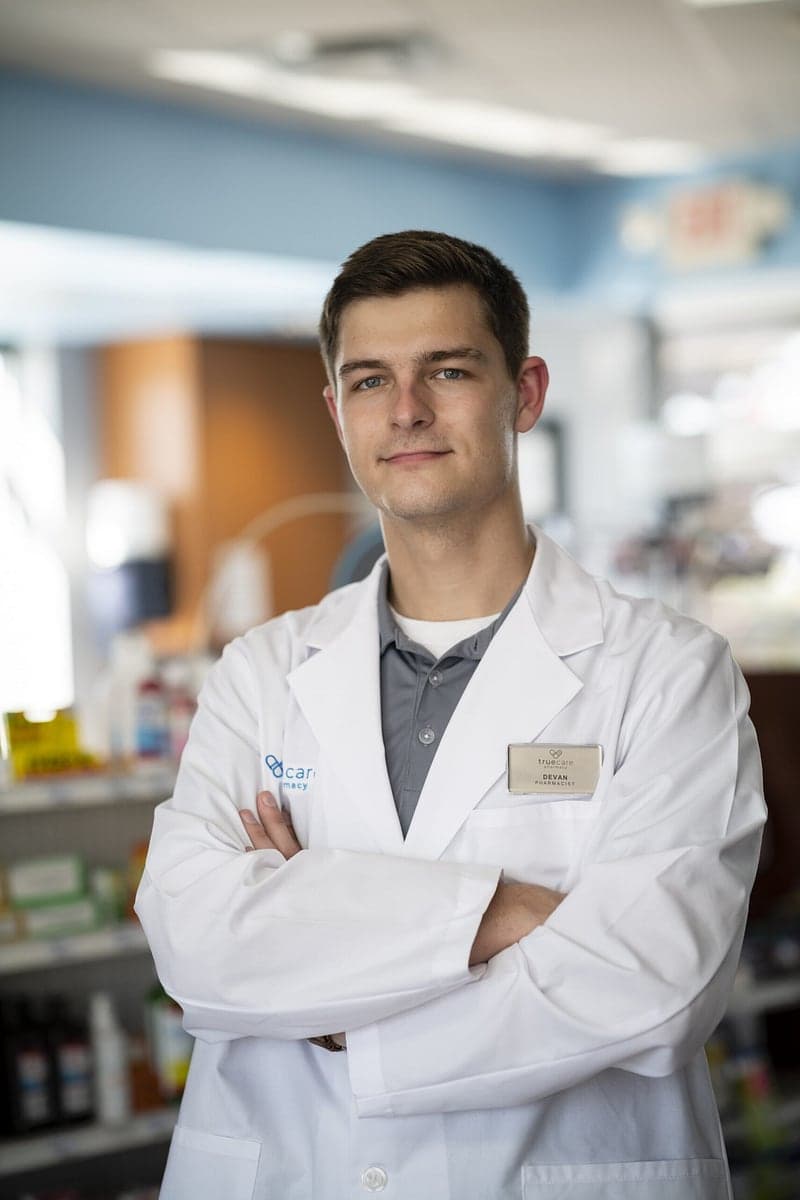
Devan Conley, PharmD
Founder — and the pharmacist who kept running into these problems
It started with a thermometer.
Our pharmacy needed a temperature sensor in the fridge — the kind of thing that should cost about what a nice dinner costs. I asked for a quote. What came back was priced for a hospital system: enterprise hardware, enterprise contract, enterprise everything. For a sensor. In a fridge.
So I built my own, and I put it in for what it actually cost. That's Sentinel, and it's the first thing I ever shipped.
Then I got curious, and I went back through everything else we'd been paying for over the years. A login for this. A portal for that. A subscription for a thing we used twice a month. Each one had shown up to solve a real problem, and each one was, on its own, defensible. But stacked up, over years, they'd quietly become a problem of their own — a back office full of tabs, and a bill for every one of them.
Here's the part that got under my skin. We were the ones doing the actual work. Standing at the counter. Talking to patients. Catching the thing nobody else caught. And so much of what we earned doing that was flowing straight back out to companies that had never met the people we were taking care of.
If we paid market rate for someone to solve every problem we weren't equipped to solve ourselves, we'd go out of business.
I got fed up. And I decided I was going to bring the cost of this stuff down and hand some power back to the people doing the work.
What I actually believe
Vitalis comes from the Latin vita — life. Putting Vitalis into your business should breathe some life back into it.
Which is a strange thing to say about automation, I know. But that's the whole idea. The predictable, repeatable, grinding parts of the day are exactly what a system should absorb. What can't be systematized — judgment, creativity, the conversation with the person in front of you, the problem nobody saw coming — is what humans are for. Every hour a system takes off your plate is an hour that goes back to that.
A pharmacist buried in busywork is a pharmacist who isn't looking up. I've been that pharmacist. The technology isn't the point — the time it gives back is the point.
Small businesses want to scale. Big businesses want to feel small again. Both are asking for the same thing, and it isn't more software. It's room to be human at scale.
How I'll run this
Anyone can list values. These are the ones that cost me something, which is the only reason they're worth writing down.
Priced on what it costs me, not on what you can afford
The quote that started this company was high because of who was asking, not because of what it was. I won't build a pricing model that works that way. If your business is bigger, that isn't a reason to charge you more.
No lock-in, ever
No multi-year contracts, no hostage data, no cancellation maze. If Vitalis stops being worth it, you should be able to leave and take everything with you. I'd rather earn it every month.
Your data is yours
I don't sell it, mine it, or quietly use it to build something else. If I ever want to use your data for anything, I'll ask you first, in plain language — and it'll be because there's something in it for you.
Never the eleventh login
The reason I started this was a back office drowning in portals. One account gets you every Vitalis product. Adding the next one doesn't add another password.
I stay behind the counter
I still work as a pharmacist, on purpose. It's how I find the problems worth solving. I'd rather build for a job I actually do than guess at one from a distance.
Where things honestly stand
I'd rather you hear this from me than find it out later.
Vitalis is me. One person. I formed the company this year. Sentinel is real and running — I built the hardware, it's in a fridge, the alerts fire, and I can watch the temperature wobble at the busy hours when the door keeps opening. MedTrack is in active development. The platform underneath both of them — one account, one dashboard, one bill — works today.
And I don't have any paying customers yet. You'd be among the first.
I know how that sounds. Here's the other side of it. Being one person is why the prices can be what they are — there's no sales team, no investors to feed, no floor of overhead I have to cover before I get to you. I use every tool I can to automate my own work, for exactly the reason I'm asking you to: so that when you need a human, there's one available. That happens to be me.
I grew up around technology and I've been taking things apart my whole life. I never stopped asking why. That's not a credential — it's just who I am, and it's a switch I can't turn off. If you bring me a problem I don't know how to solve yet, I'll learn it. That's the actual thing I'm offering.
At this stage, my success depends entirely on yours. That will never be more true than it is right now.
Tell me what you're stuck with
If something here solves a problem you have, take it. But if you look at what I've built and think I wonder if he could do this other thing — that's the conversation I actually want to have.
Describe the problem. If it already exists in the library, you'll be running it today. If it doesn't, we'll talk about what it would take — and the answer is usually faster than you'd expect. I'm looking for a handful of early partners to build alongside, and I'll make it worth being early.